





At Cabrini Homes on East nineteenth Avenue in Manhattan’s Gramercy neighborhood, ballot employees mentioned that they had seen traces since earlier than 6 a.m., with the pre-work rush zigzagging across the vote heart.
Photograph by Adam Daly
New York might have a “super” voice in choosing presidential nominees in 2028 and past.
That’s the hope of State Senator James Skoufis and Bronx Assemblymember Landon Dais, who’re set to introduce laws to completely transfer the state’s presidential major to Tremendous Tuesday — the high-stakes day when roughly one-third of delegates are awarded.
“For the past several cycles, despite our population’s size, economic and cultural importance, and deep diversity, New York’s role in picking our nation’s presidential nominees has been relegated to the sidelines by a primary date that arrives too late to matter,” mentioned Skoufis, whose district relies in Orange County within the northern suburbs. “With this bill, our votes will count.”
The sponsors say the shift would draw main marketing campaign investments and nationwide media consideration, forcing presidential contenders to satisfy New York voters and handle native points in the course of the major season moderately than treating the state primarily as a fundraising cease.
Why now, and how briskly do they should transfer?
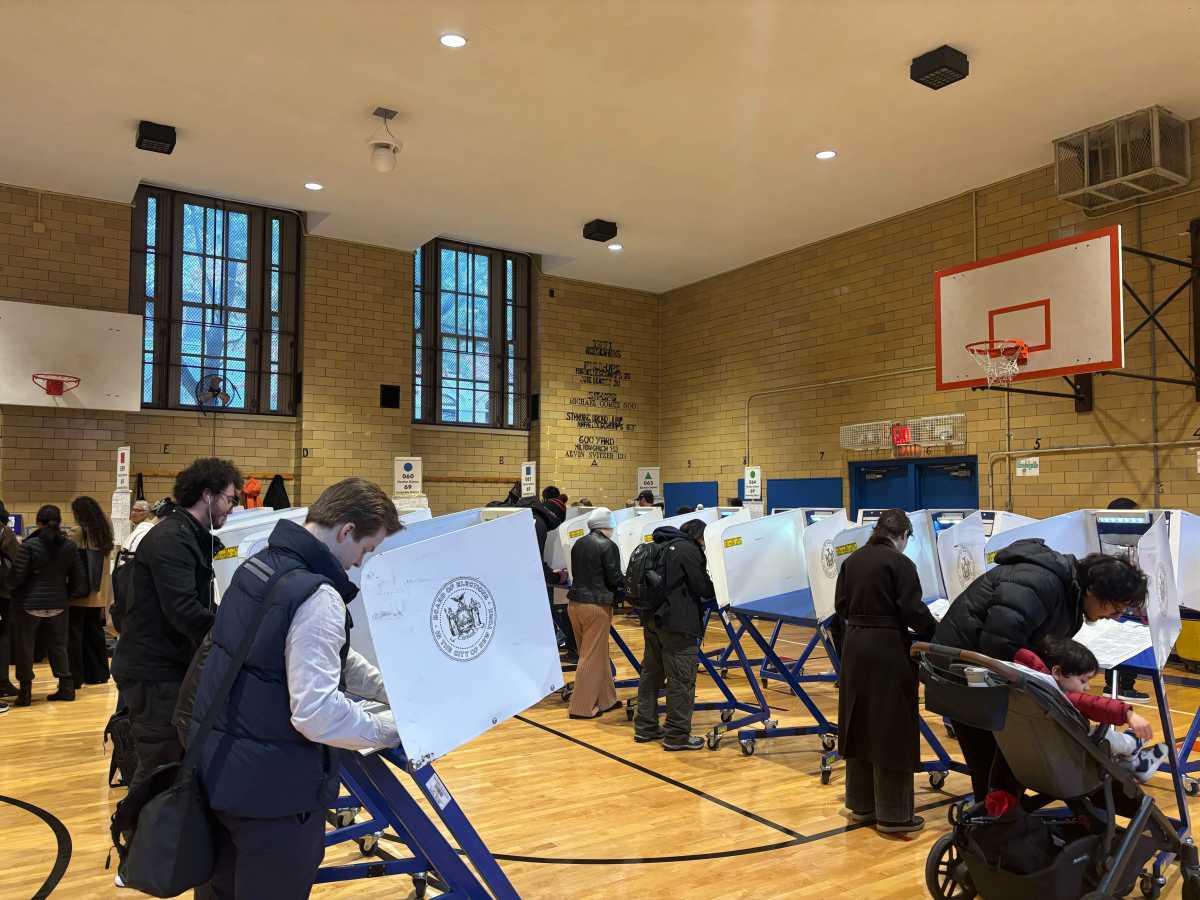 New Yorkers forged their ballots within the 2025 NYC Mayor’s race at P.S. 333 on the Higher West Facet on Election Day, Nov. 4, 2025.Photograph by Shea Vance
Skoufis advised New York News on Thursday that the timing of the invoice — two years forward of the subsequent presidential election —is deliberate, because the nationwide events at the moment are setting the foundations and framework for the 2028 presidential calendar. New York wants a statutory change in Albany to align with these choices.
“The national parties… are putting together the rules and the framework now for the 2028 presidential calendar,” he mentioned, including that the legislature must act this session so New York could be “in sync with the DNC and the national parties.”
“It’s important for us this coming legislative session to, in parallel, make this statutory change and get us towards the front of the calendar,” Skoufis mentioned.
He continued that the legislature’s upcoming session, which runs by means of June, is successfully a deadline for implementing the change in time to be thought of for the early home windows the DNC will set.
If the invoice passes the legislature, Skoufis mentioned he expects the governor would signal it. Gov. Kathy Hochul’s workplace didn’t touch upon the proposal however mentioned the governor will overview the laws if it passes each homes in Albany.
Within the 24 hours since saying the laws, he mentioned the invoice had practically 20 Democratic co-sponsors, roughly half of the chamber’s majority. Many extra lawmakers who hadn’t formally co-sponsored had been nonetheless supportive, in accordance with Skoufis.
“I’m very happy to see the very early but strong support coalescing around the bill,” he mentioned. “There is, there’s a lot of political will to do this. People understand this year that we don’t want our constituents, nor do we want ourselves as elected officials and leaders, to be taken for granted in the nominating process.”
For Skoufis, the invoice is about reviving the Empire State’s affect in serving to the nation select the subsequent commander-in-chief.
“We want presidential contenders to be visiting New York for reasons beyond just raising money,” Skoufis added. “During the primary season, we want these contenders to be meeting New York voters and speaking to our issues and not just taking us for granted, which we’ve been taking for granted for far too long.”
Mechanics and what wouldn’t change
The invoice would solely have an effect on the presidential major, in accordance with Skoufis, who emphasised that the measure wouldn’t alter the scheduling of New York’s state and federal primaries, which “would remain separate.” He added that the state’s present construction, with separate presidential and non-presidential major dates in late June, would proceed.
A number of main states with massive, various populations, together with California, Texas, Massachusetts, North Carolina, Tennessee, and Virginia, already vote on Tremendous Tuesday, the only busiest date within the presidential nominating calendar, when the best variety of states and territories maintain primaries or caucuses.
In 2024, Tremendous Tuesday fell on March 5, with seventeen jurisdictions collaborating: Alabama; Alaska (Republican major); American Samoa (Democratic caucus); Arkansas; California; Colorado; Iowa (Democratic major); Maine; Massachusetts; Minnesota; North Carolina; Oklahoma; Tennessee; Texas; Utah; Vermont; and Virginia.
Final 12 months, New Yorkers forged their ballots within the race over three weeks later, on March 30.
“By fixing our primary to one of the nation’s biggest election days, we can give every New Yorker the opportunity to help select the next president and ensure our communities count where it matters most,” Meeting Member Dais mentioned in an announcement.
Skoufis additionally defined how New York has traditionally traded its earlier affect for bonus delegates by shifting itself towards the again of permitted home windows — a technique he mentioned has produced little return by way of actual affect.
“New York has voluntarily… moved itself to the back of the window in an effort to get what are called bonus delegates,” he mentioned, arguing the state ought to as an alternative settle for much less in bonus delegate guidelines in trade for better affect on the candidates.
Skoufis said that aggressive presidential contests drive turnout, not the calendar itself, and argued that shifting the first earlier would end in extra aggressive, high-profile races in New York.
“If we have a highly competitive primary here… that is what is going to bring out a significant voter turnout,” he mentioned.
