





For Mayor Zohran Mamdani, the primary 100 days have been filled with efforts to point out that authorities can nonetheless ship for extraordinary New Yorkers. He has used social media, public appearances, and small however seen coverage strikes to argue that Metropolis Corridor might be energetic, responsive and on the facet of working individuals.
However because the final reform-minded mayor to win over 1,000,000 votes, John Lindsay, realized, there could be a nice price to good intentions. Now comes Mamdani’s first take a look at that can’t be gained with messaging alone: the funds.
As Margaret Groarke, a professor of political science at Manhattan Faculty, put it, Mamdani has “continued to campaign” as mayor, attempting to point out New Yorkers that authorities can resolve actual issues that, in lots of cases, he has not but begun to resolve.
The funds battle will decide whether or not he can present how town pays for them wihtout his tax-the-rich/tax-the-property proprietor schemes.
That’s what makes the rising funds conflict the defining story of Mamdani’s opening months in workplace, if not the defining story of his first time period. The query is not whether or not town has an issue. There’s broad consensus that it does, and bond rankings businesses agree — with 4 of them reducing town’s monetary forecast as a precursor to probably downgrading town’s bonds.
The battle now could be over whether or not it may be solved by reducing spending, elevating income, getting assist from Albany, or a mix of all three.
More cash, extra issues for Mamdani and NYC
Mayor Zohran Mamdani and Metropolis Council Speaker Julie Menin on the launch of the District 2 Pre-Ok and 3-Ok Middle on the Higher East Facet, Feb. 19, 2026.Photograph by Lloyd Mitchell
The mayor’s critics and defenders begin from the identical premise: town’s books look extra trustworthy now than they did earlier than he took workplace.
In a latest evaluation, the Residents Finances Fee praised the administration for presenting “a much more credible accounting” of town’s fiscal place whereas arguing that the improved transparency uncovered a deeper structural imbalance between revenues and bills. CBC stated underbudgeting had masked the issue, not created it.
The group put the mixed hole throughout fiscal years 2026 and 2027 at $9.4 billion and stated fiscal 12 months 2026 spending was $16 billion increased than it will have been had it grown on the price of inflation since fiscal 12 months 2017.
Mamdani has tried to border the numbers in another way, although not essentially extra optimistically. At an April 9 press convention, he stated town first disclosed a $12 billion disaster, then diminished it to $7 billion via up to date income estimates and financial savings measures, after which to $5.4 billion after Gov. Kathy Hochul dedicated $1.6 billion in state assist. What issues now, he stated, is discovering what he known as a “structural solution for a structural crisis.”
He has insisted that the property tax enhance in his preliminary funds is a “path of last resort” and that his administration’s $1.7 billion in deliberate financial savings are “savings and efficiencies, not cuts to services.”
The mayor’s concept of a structural resolution differs considerably from different obtainable alternate options.
For Andrew Rein, president of the Residents Finances Fee, town’s drawback is easy: spending has grown past what town can sustainably assist, and the reply is to not seek for extra income however to get extra severe about restructuring authorities.
Rein stated the Metropolis Council’s response to Mamdani’s preliminary funds was “refreshing” as a result of it a minimum of tried to shut the hole with out elevating taxes or dipping into reserves. He additionally rejected the mayor’s argument that the outlet can’t be closed via spending restraint with out “decimating” companies. “If we’re smart and do the hard work,” Rein stated, “you can close this budget gap by reducing spending while preserving critical services.”
The mayor has seasoned funds specialists in his interior circle, together with First Deputy Mayor Dean Fuleihan, who’re dedicated to a tax-and-spend agenda.
Others say NYC robust sufficient to spend extra
 Gov Hochul and Mayor Mamdani arrive to talk at Girls In Want (WIN) in Manhattan on Thursday to spotlight their proposal for common youngster care for youngsters underneath 5.Photograph by Lloyd Mitchell
Emily Eisner, appearing govt director and chief economist on the Fiscal Coverage Institute, sees the identical numbers in another way. She agrees the spending drawback is actual.
Chatting with New York News, Eisner stated metropolis spending had are available “about 10% higher” than budgeted for a number of years, leaving the brand new administration with obligations that have been bigger than the funds had acknowledged.
However she doesn’t see that as a cuts-first story. She stated FPI believes “the tax base is in the city and the state is strong enough to sustain the higher spending,” even when present metropolis estimates present a shortfall relative to projected prices.
Eisner can also be extra skeptical than Rein of the Metropolis Council’s different. She stated a few of the Council’s assumptions could show proper, however that the package deal as an entire seemed like “the most optimistic case,” assembled from emptiness financial savings and the hope that spending would are available under present projections throughout a number of classes directly. In a separate reply, she known as it “a bit of a wish list.”
That distinction — whether or not town’s foremost drawback is extreme spending or inadequate income authority — sits on the heart of the battle. Rein says, “this is not a revenue problem.” Eisner says the obligations are actual and the tax base is there to assist them.
Each agree that the baseline funds is costlier than marketed earlier than Mamdani took workplace. They disagree on what that recognition ought to pressure Metropolis Corridor to do subsequent.
Will increased taxes drive extra New Yorkers away?
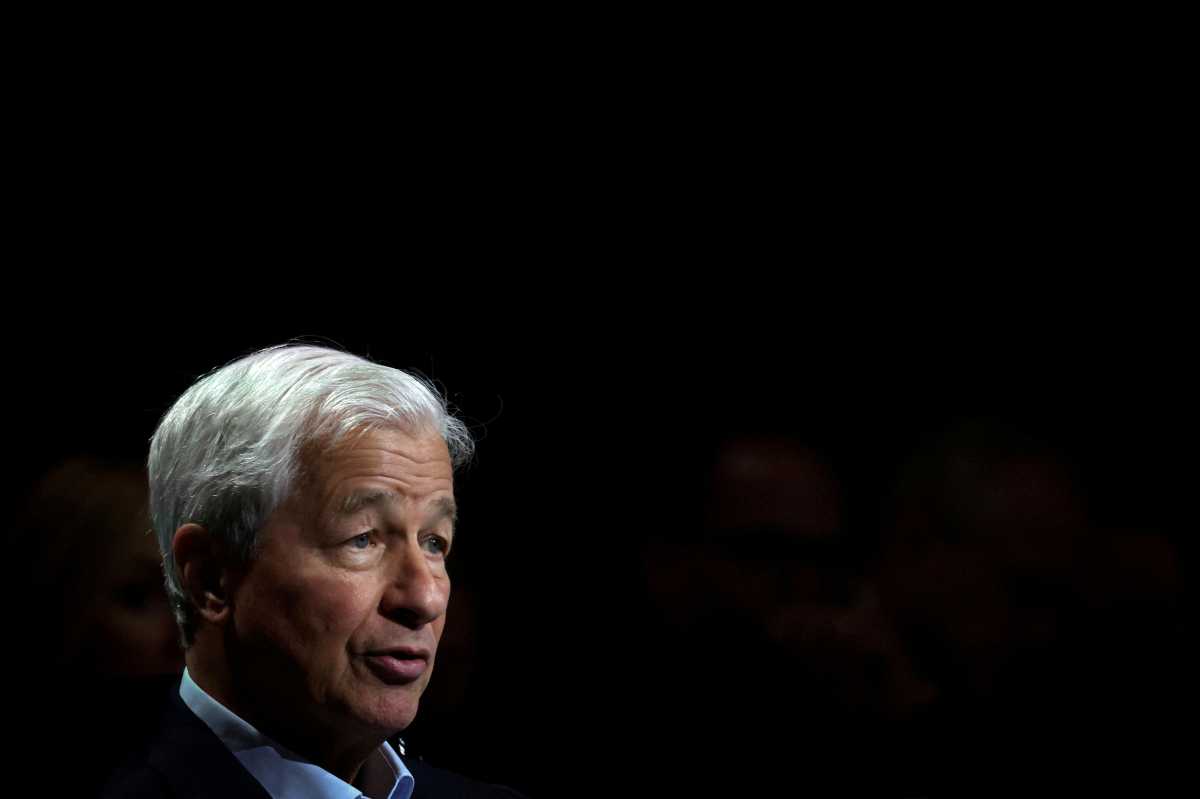 Jamie Dimon, chairman and CEO of JPMorgan Chase & Co., was a notable no-show to the Partnership for New York Metropolis’s July 15 assembly between enterprise executives and then-Democratic mayoral nominee Zohran Mamdani.REUTERS/Mike Segar/File Photograph
The disagreement is sharpest on probably the most politically charged questions within the debate: whether or not taxing high earners extra would really drive them away.
Eisner argues that the tax-flight case is overstated. She factors to FPI’s analysis which exhibits that elevating taxes on excessive earners in New York didn’t set off an exodus prior to now, and he or she pushed again on claims that New York’s slower millionaire development relative to locations comparable to Texas proves increased taxes are hollowing out the tax base.
That, nonetheless, might change quickly. In his April letter to shareholders, JPMorganChase CEO Jamie Dimon warned that any will increase in taxes in New York Metropolis could possibly be the ultimate straw for a lot of employers and their staff alike.
“The truth is that while New York City has much going for it, particularly for financial companies (because of extraordinary local talent), it also has the highest city and state corporate taxes and the highest individual income and state taxes,” Dimon wrote. “People often make this a moral or loyalty issue, but it is not. Companies need to remain competitive in this very tough, fast-moving world. And higher taxes mean lower returns on capital and less competitiveness by their nature.”
She stated New York has nonetheless seen development in millionaire earners and argued that housing prices, transit and the general price of residing do extra to clarify why some individuals select to dwell elsewhere. She additionally stated that when excessive earners depart, they usually go to different high-tax states, not merely to low-tax jurisdictions.
Rein is taking a look at a distinct warning signal. He’s much less centered on whether or not rich New Yorkers instantly flee after a tax enhance than on whether or not town is shedding floor within the competitors for prosperous residents and enterprise exercise over time. He stated New York is in “fierce competition” for residents and companies of every kind and argued that town has a shrinking share of the nation’s millionaires.
Ken Girardin, a fellow on the conservative Manhattan Institute, pushes that critique even additional and explicitly rejects the best way FPI frames the query. He stated the true subject will not be whether or not the “frog jumps out of the pond,” however whether or not the “tadpoles” are ending up in different ponds.
In different phrases, he’s much less thinking about dramatic tales of rich taxpayers bolting for Florida than within the slower query of the place corporations are increasing, the place finance-sector wealth is rising and whether or not New York is steadily shedding share of future development. He additionally warned that the extra town depends on risky private revenue and company tax receipts, the extra weak it turns into to sudden shocks.
That leaves the tax debate resting on two completely different requirements of proof. Eisner and FPI argue that if tax hikes increase income and don’t produce a visual surge in millionaire out-migration, the tax-flight case is weak. Rein and Girardin argue that the larger hazard is slower and tougher to measure: not a one-year exodus, however an extended erosion in the place wealth, corporations and future development select to find.
Groarke, the Manhattan Faculty political science professor, presents a 3rd lens, much less in regards to the tax information than about what the battle says about Mamdani as a governing mayor.
She stated the funds conflict exhibits each the promise and the restrict of his first 100 days. He has tried to make use of small wins and public bulletins to point out that authorities can work, she stated, however the bigger model of that politics now depends upon cash town doesn’t but have.
And whereas calls to “find efficiencies” are at all times politically standard, she warned that many businesses have already been requested to do extra with much less for years. Groarke stated it’s “not always clear that there are magic savings to be found of any significant amount.”
Mamdani vs. Menin on taxes
In most years, funds season in New York follows a well-known script: Metropolis Corridor threatens cuts to seen companies, the Council protests, and the 2 sides haggle their solution to a compromise. Groarke stated this 12 months is completely different. The problem now isn’t just whether or not town has sufficient cash to guard the fundamentals, however whether or not its income construction is sufficient to cowl what New Yorkers have determined they need authorities to do.
That dispute has now damaged into the open between Mamdani and Council Speaker Julie Menin. On the Nationwide Motion Community conference on April 8, Menin known as the mayor’s proposed 9.5% property tax enhance a “hard no,” arguing that it will damage Black communities and small companies.
She stated the Council’s plan centered as an alternative on efficiencies and reforms, together with financial savings from not budgeting for positions which have remained unfilled. Mamdani responded the subsequent day that he shared the opposition to a property tax enhance and once more known as it a “path of last resort.”
However he additionally argued that anybody who needs to keep away from placing the burden on working-class and middle-class New Yorkers ought to be part of him in urgent Albany to boost taxes on rich residents and worthwhile companies as an alternative.
Mamdani has additionally drawn a tough line on what he won’t do. “The things that will never be in question for me are the cutting of essential services to New Yorkers,” he stated on April 9.
His argument is that if town budgets for multibillion-dollar financial savings that aren’t backed by proof, particularly in emptiness reductions, it is going to ultimately be pressured to chop companies to make the numbers work. That’s his central objection to the Council plan.
The least enticing a part of the talk could also be that not one of the fallback choices are particularly interesting. CBC discovered that the mayor’s gap-closing plan relied closely on a proposed property tax enhance, reserve drawdowns and different nonrecurring sources.
By the group’s accounting, $3.7 billion of the answer got here from the property tax enhance, $1.4 billion from reducing fiscal 2027 budgetary reserves, and $1.2 billion from the wet day fund and the Retiree Well being Advantages Belief.
CBC argued these strikes would make New York much less reasonably priced whereas weakening its fiscal resilience in a downturn. It additionally stated the fiscal 2027 funds would come with solely $100 million in in-year reserves and that the wet day fund would fall to about $1 billion, far under the roughly $15 billion CBC says a typical two-year recession would require.
Rein agrees on that time. He stated town ought to defend the wet day fund for a recession or an outlined extreme emergency, not use it to resolve what he sees as a “self imposed fiscal problem.” He stated a typical recession, earlier than the pandemic, price town funds about $15 billion over two years.
Girardin goes even additional. He stated Metropolis Corridor is enjoying “fast and loose” with the wet day fund and argued that the administration has not but used probably the most severe instruments obtainable to pressure laborious decisions.
His chief criticism is procedural as a lot as ideological: Mamdani created chief financial savings officers, however has not directed businesses to undergo a extra conventional PEG course of to eradicate the hole. Girardin stated that makes the mathematics tougher and will increase the chance that the ultimate funds can be held collectively by “gimmickry or dubious assumptions.”
For Girardin, the hazard in Mamdani’s tax rhetoric will not be solely that it would weaken town’s tax base. It’s that it reduces strain to optimize how authorities spends the cash it already has. He stated the mayor faces “difficulty reconciling his sincere, earnest commitment to improving public service delivery, with his reluctance to challenge the status quo in how those services are delivered.”
The larger dialog dealing with NYC
His broader level is {that a} revenue-first politics can crowd out a tougher dialog about how businesses really function.
Eisner components methods sharply with that view on one necessary level: the property tax hike. She stated a “small increase in the property tax rate” is preferable to reducing important companies, significantly with the specter of federal cuts to well being care and diet help hanging over the subsequent 12 months or two. Her most popular reply is broader income authority from Albany and property tax reform. But when the state says no, she sees a modest property tax enhance because the lesser evil.
Groarke, in the meantime, notes that the property tax is without doubt one of the few main income levers town can management by itself, even whether it is inconsistently distributed. That’s a part of what makes the funds battle such a revealing take a look at of Mamdani’s governing type. To get motion, she argues, an rebel mayor could should hold campaigning in workplace, rallying supporters, pressuring lawmakers and framing the dispute as a query of equity fairly than simply arithmetic.
She additionally argued that social media is “super important” to that effort as a result of it helps an govt talk outcomes, take heed to voters and construct strain on different energy facilities.
That stress between motion politics and institutional energy could be the clearest lesson of Mamdani’s first 100 days. His allies see a mayor utilizing public strain and ethical framing to do the one factor obtainable when Albany controls most of the actual fiscal levers. His critics see a mayor nonetheless extra snug speaking about equity than about company restructuring, labor prices and long-term development.
Girardin, for one, stated it was notable how little the mayor talks about financial development as a solution to ease funds strain. Rein put the query in much less ideological phrases: Will Mamdani be as formidable about bettering the standard and effectivity of metropolis companies as he has been about making New York extra reasonably priced?
